What Is a Fair Value Gap (FVG)? A Complete Guide
Key Takeaways
- A Fair Value Gap (FVG) is a three-candle imbalance where price leaves a clear zone unfilled—often used for entries and targets.
- FVGs can be bullish (gap up) or bearish (gap down); traders look for price to return and fill or respect the gap.
- Combine FVG with structure (support/resistance, order blocks) and risk rules instead of trading every gap.
- Log FVG trades in your journal to see which timeframes and market conditions make them work for you.
Table of Contents
What Is a Fair Value Gap?
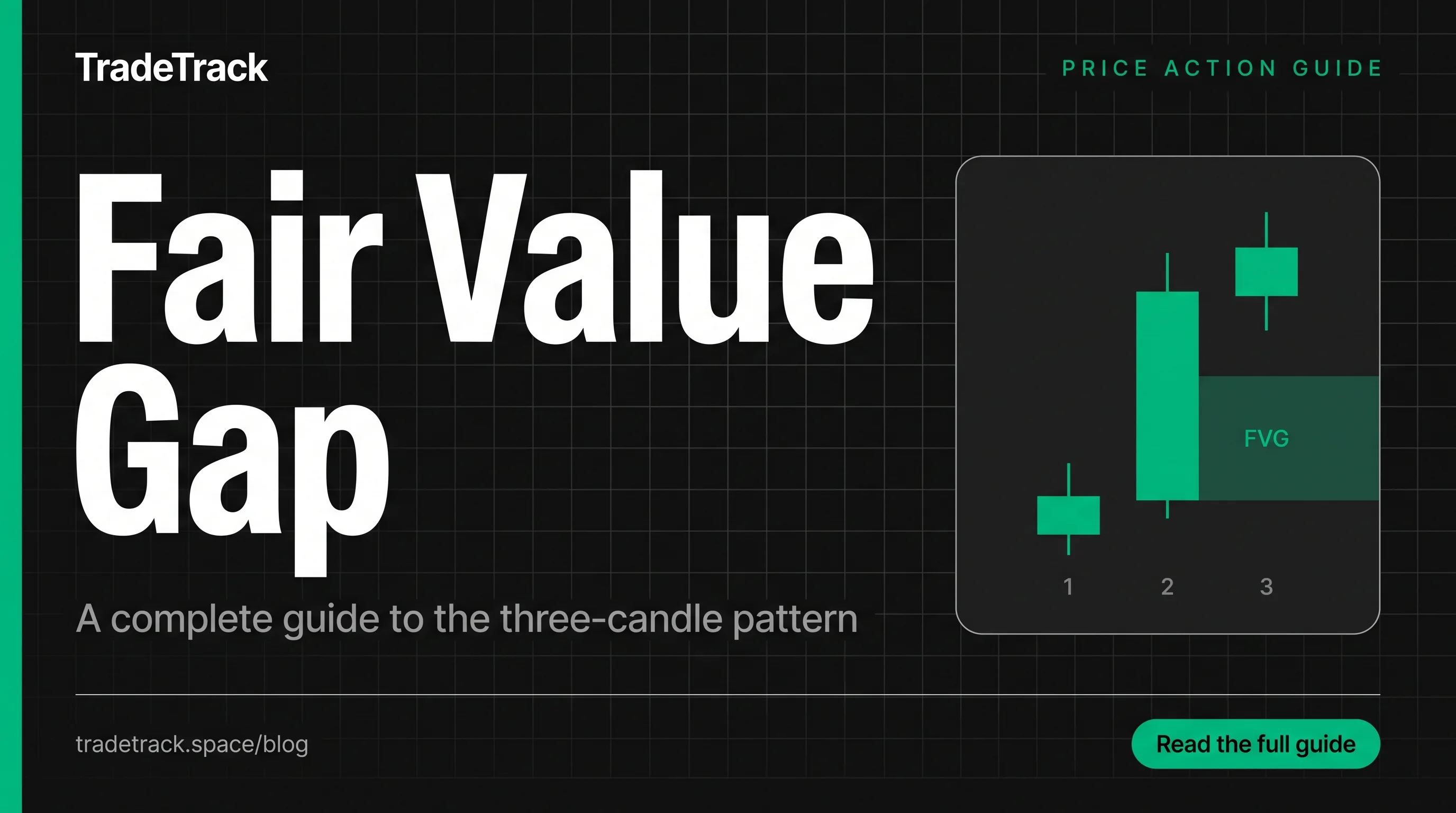
A Fair Value Gap (FVG) is a three-candle pattern where the body of the first candle and the body of the third candle do not overlap, leaving a visible “gap” on the chart. Price often returns to that zone later, so many traders use it for entries, stop placement, or targets.
FVGs are popular in ICT-style and smart-money concepts, but the idea is simple: the market moved so fast that it left an area with no balanced trading—a “fair value gap” that may get filled or act as support/resistance.
Bullish and Bearish FVG
Bullish FVG: The low of candle 3 is above the high of candle 1. The gap is below price. Buyers often use a return to this zone as a long entry or add.
Bearish FVG: The high of candle 3 is below the low of candle 1. The gap is above price. Sellers use a retest of this zone for short entries.
Not every FVG leads to a clean trade. Filter by higher-timeframe structure, session (e.g. London, New York), and volatility so you only take high-probability setups.
How Traders Use FVG
Traders use Fair Value Gaps in different ways:
- Entry: Wait for price to come back into the FVG, then enter in the direction of the gap (long in bullish FVG, short in bearish).
- Stop placement: Put stops on the other side of the FVG so invalidation is clear.
- Targets: Use the opposite side of the FVG or the next FVG/structure as a profit target.
Always define risk (e.g. 1R) and reward before entry. FVG improves context; it doesn’t replace risk management.
FVG and Your Journal
Track every FVG trade: tag the setup (e.g. “bullish FVG”, “bearish FVG”), note session and pair, and log outcome. Over time you’ll see which gaps and conditions are worth trading and which you should skip.
A journal like TradeTrack lets you tag setups, filter by session and symbol, and review win rate and R so you can refine how you trade Fair Value Gaps.